Alternative Fuel Vehicle Refueling Property Tax Credit
March 31, 2026 by Neal D. Volker
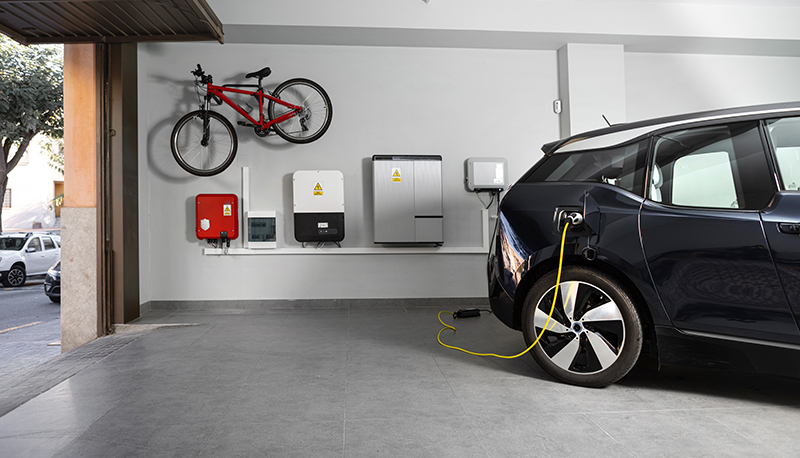
Is there a tax credit for installing charging and/or refueling equipment for my alternative fuel vehicle at home?
YES! But time is running out. Under the Alternative Fuel Vehicle Refueling Property Credit (Code §30C), you can get a tax credit to help with the cost of installing charging/refueling equipment at your primary residence. However, the credit, which was set to expire in 2032, is now set to expire June 30, 2026, as part of the passage of the One Big Beautiful Bill Act (OBBBA).
What is the Alternative Fuel Vehicle Refueling Property Credit?
Qualified individuals can get a tax credit for installing eligible charging and/or refueling equipment at their primary residence. Credits provide a tax break when filing a tax return by reducing the tax dollar-for-dollar. This credit was originally created in 2005 and has been amended and extended over the years, with the latest changes enacted by OBBBA.
The credit is also available to businesses and other entities, but different rules apply. This article will focus only on what applies to individuals. If you have questions about how the credit may apply to your business, you should contact a tax professional for assistance.
Is there a deadline for installing the equipment?
Yes, the equipment must be placed in service by June 30, 2026. The credit expires after June 30, 2026, so equipment installed after that date does not qualify. Placed in service means the installation is complete, and the equipment is ready to use.
Having a signed contract, paying for the installation, or starting the installation by the June 30, 2026, deadline does not count. This is because the installation is not complete, and the equipment is not ready to use by the deadline. What is important is that the equipment is installed and ready to use by the deadline, but that does not necessarily mean it is being used. For example, if equipment is installed and ready to use on June 15, 2026, but is first used on July 15, 2026, it would still qualify for the credit because the equipment was ready to use by the June 30, 2026, deadline.
What charging or refueling equipment qualifies for the Alternative Fuel Vehicle Refueling Property Credit?
Equipment that charges, stores, or dispenses an alternative fuel for your vehicle at the point (on property used as your primary residence) where the vehicle is charged, or the fuel is delivered into the tank of the vehicle qualifies for the credit. The building or its structure does not qualify. So, the credit applies only to the equipment specifically needed to store or deliver the fuel, not to the building in which the equipment is housed. The most common type of qualifying equipment is a charging station for an electric or plug-in hybrid vehicle.
How does the Alternative Fuel Vehicle Refueling Property Credit work if I install more than one piece of eligible equipment on my property?
The credit is applied on a per-item basis rather than per property. Although it is uncommon for an individual to install more than one piece of eligible charging and/or refueling equipment, if you do install two or more pieces of equipment, the credit would be applied to each piece. An example is installing a charging station in your attached home garage and another in a separate garage or workshop on the property.
 What fuel qualifies for the Alternative Fuel Vehicle Refueling Property Credit?
Vehicles that run on the following fuels qualify for the credit:
- Electricity
- Liquefied petroleum gas (such as propane)
- Natural gas, including compressed natural gas and liquefied natural gas
- E85 (85% ethanol)
- Hydrogen
- Diesel fuel blends containing a minimum of 20% biodiesel
Are there any other qualifications for the Alternative Fuel Vehicle Refueling Property Credit?
Yes, other key qualifications are:
- Be placed in service during the tax year but no later than June 30, 2026
- The original use began with the taxpayer, so no credit for used equipment
- Used primarily in the U.S. and U.S. territories
- Be installed on the property used as a main home
- Be in an eligible census tract (as of January 1, 2023)
What is the eligible Census tract requirement for the Alternative Fuel Vehicle Refueling Property Credit?
The refueling or recharging property must be installed in a low-income community census tract or a non-urban census tract.
To find out if the property is located in an eligible Census tract, follow these steps:
- Use the address or coordinates of the property with the Census Bureau’s 2020 Census Tract Identifier to obtain the 11-digit census tract GEOID at the following website - www.census.gov/data/data-tools/2020-census-tract.html
- Search for the 11-digit GEOID obtained from step 1 in the appendix B of the Form 8911 instructions or at this website - IRS.gov/pub/irs-drop/appendix-b-listof-2020-census-tract-boundary-30c-eligible-tractsv2-1-4-2024.pdf
What is the Alternative Fuel Vehicle Refueling Property Credit amount?
The Alternative Fuel Vehicle Refueling Property Credit for individuals can be up to 30% of the cost of the equipment, with a maximum credit amount of $1,000. For example,
- If the equipment costs $3,000, the credit would be $900 ($3,000 X 30% = $900). This means you can reduce the amount of tax on your return by $900.
- If the equipment costs $4,000, 30% of $4,000 is $1,200, but the credit would be limited to $1,000 because the maximum amount of the credit is $1,000, even though 30% of the equipment cost is more.
If the tax on my return is less than the Alternative Fuel Vehicle Refueling Property Credit amount, will the difference be refunded?
No, the difference is non-refundable for individuals. If your tax reaches $0, then any remaining credit amount is lost. If there is no tax liability to begin with, then the credit cannot be used at all.
For example: If your tax is $800, and you receive a credit of $1,000, then your tax will be reduced to $0, and the remaining $200 is lost. You won’t receive a refund of the remaining $200.
Can the Alternative Fuel Vehicle Refueling Property Credit amount be carried forward or backward?
No, individuals cannot carry the credit forward or backward. The credit is only available for use in the year the equipment is placed in service.
How do I claim the Alternative Fuel Vehicle Refueling Property Credit?
You claim the credit by filing Form 8911 along with Schedule A of Form 8911 with your federal tax return. If you use tax preparation software, such as TurboTax, the program will ask a few questions, then enter your answers on Form 8911 and Schedule A, along with doing the calculation. It is always advisable to double-check the entries on the forms and the calculation for accuracy. Even if you use tax preparation software, you will still need to verify if the property is located in a low-income community or non-urban census tract. If you prefer to fill out the forms yourself, they are available on the IRS website along with instructions for filling them out.
Does the Alternative Minimum Tax (AMT) affect this credit?
Yes. If you pay AMT, you will not be able to claim this credit. If you are close to paying AMT, this credit may be limited by your tentative minimum tax. The rules and calculations for how AMT may apply to your specific situation or limit your ability to take the credit are complicated, so if you have questions about AMT, you should contact a tax professional.
Alternative Fuel Vehicle Refueling Property Credit Summary for Individuals
- A tax credit for eligible charging/refueling equipment placed in service in the tax year
- Deadline changed from 2032 to June 30, 2026, after passage of OBBBA
- Eligible equipment that charges, stores, or dispenses an alternative fuel
- Fuel includes electricity, propane, natural gas, E85, hydrogen, biodiesel
- Credit is per item installed rather than per property
- New equipment must be installed on your main home property in the U.S. or territories
- Property must be in a low-income community or a non-urban census tract
- Credit is 30% of equipment cost, with a maximum credit amount of $1,000
- Credit is nonrefundable and there are no carry forward or backwards
- Claimed on Form 8911 along with Schedule 1 of Form 8911
- Alternative Minimum Tax may reduce or eliminate the credit
Remember, the deadline is June 30, 2026, so if you are considering installing a charging station for your electric or plug-in hybrid car, you don’t want to delay since the equipment has to be installed and usable by that date. Be sure to save documentation to support the credit in case of an audit. This would include purchase papers, installation contracts, permit documents, and payment receipts.